
PROTECTING PEATLANDS: A WIN-WIN FOR ALL
In partnership with the Sebangau National Park, BOS is launching its new Sebangau Program. The goal is to safeguard vital peat-swamp forests, which are home to more than 6,000 wild orangutans.
Peatland ecosystems are among the world’s largest carbon stores. When wet, they retain water and store vast amounts of carbon. However, when they dry out, especially during El Niño events, they become highly vulnerable to fire. This vulnerability is particularly pronounced during a Super El Niño, which experts predict for late 2026.
Fires in peatlands not only destroy surface vegetation but also burn the organic soil layers beneath. The impacts can be long-lasting, from biodiversity loss to the release of massive amounts of carbon into the atmosphere. Therefore, preventive efforts are key to maintaining ecosystem balance and protecting vital peatland habitats like the Sebangau National Park. The park contains one of the most important remaining peat-swamp forests on Earth and is home to more than 6,000 critically endangered Bornean orangutans.
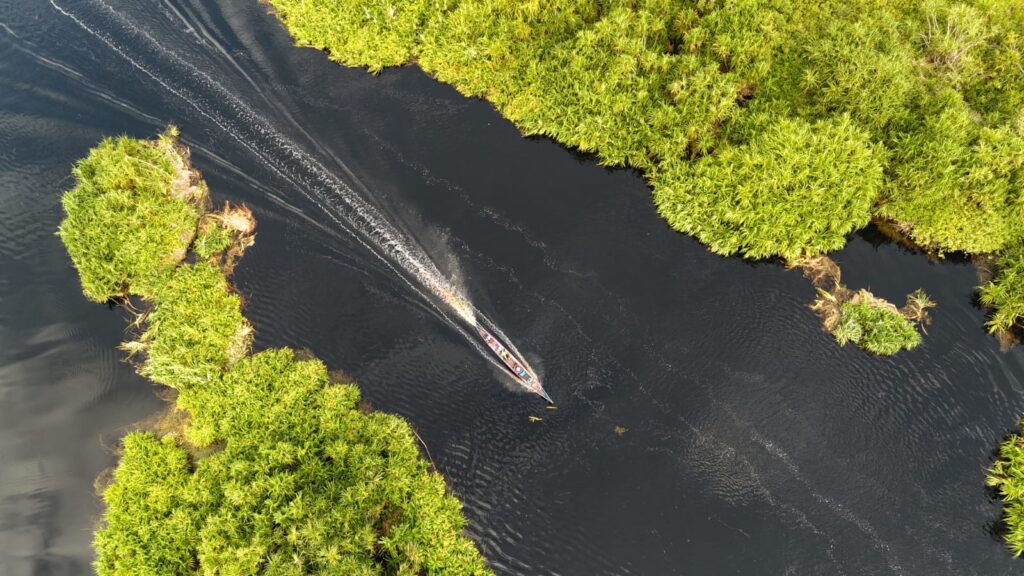
One of the preventive measures in the Sebangau Program is clearing and managing rasau plants, which tend to grow uncontrollably in peatlands. If left unmanaged, they can act as a fire corridor, accelerating the spread of fire.

The Sebangau National Park is home of one of the most important remaining peat-swamp forests on Earth.
Another growing threat is the network of canals dug through the peat forest for logging and land conversion. These canals drain water from the peatland, drying the forest and making it highly vulnerable to devastating fires.
The Sebangau Program aims to reverse the damage and protect this vital ecosystem for the future, while working closely with local communities and other stakeholders, including conservation organisations and government entities.
Over the next 12 months, the BOS team, together with National Park staff and local Dayak communities, will work to restore and protect more than 4,000 hectares of peat swamp forest. One of the key activities will be to construct canal blocks to re-wet the peatland and restore the forest’s natural hydrology.
Ultimately, protecting peatlands means safeguarding the home of orangutans and thousands of other species. More than that, it is a collective effort to preserve the climate balance and our planet’s future–a win-win for all.